Palk Strait Relay
I love to make plans. My swim plan document had a note on when I could do a Palk Strait relay – it was 2027. I had no idea of how to go about it, but khayali pulao is easy to make!
An opportunity presented itself for a 5-member relay for May 2026, and I took it. I was not sure about this; it is an entry into the big leagues of the channel swim after all. I was unsure of both my abilities and of the logistics involved. Coach, as usual, said I should go for it, and I did.
To the uninitiated, relay means swimming as part of a team. Every member swims for an hour, then repeats in the same order until we reach the coast. Solo swim is when a person swims the whole distance on their own.
The swim was organised by SwimLife - a group based in Bengaluru. They take care of the logistics, permission, practice swims, food and fuel, safety, etc. – we just go and swim.
I reached Rameshwaram on 3 May 2026, where we were to practice for a few days. That is where I met my relay teammates from different parts of the country, with different backgrounds, but all on the same wavelength when it came to the swim. It clicked quickly.
Practice swims over the next few days were good. Rameshwaram beach is beautiful, but very shallow. At low tide, we need to walk a long distance to reach the swimmable waters.
Water is clear and serene. We could spot all kinds of sea life – corals, starfish, sea cucumbers, and a variety of colourful fish and jellyfish. And when in the water, we could see the beautiful coastline with the many temples. On the afternoon of 8 May, we took a ship from Rameshwaram to Sri Lanka. It took about 3 hours. We spent the night on the ship, a few kilometres away from the Sri Lankan coast. For administrative reasons, we are not allowed to land in Sri Lanka for these swims. The Sri Lankan navy boarded our ship at night, checked our documents, and cleared us for the swim.
We spent the night on the ship. Had a good dinner – rice and fish. Although no one was in the mood to enjoy the dinner. We wanted to get through the night without getting seasick. We had been taking medication to avoid seasickness, and it worked.
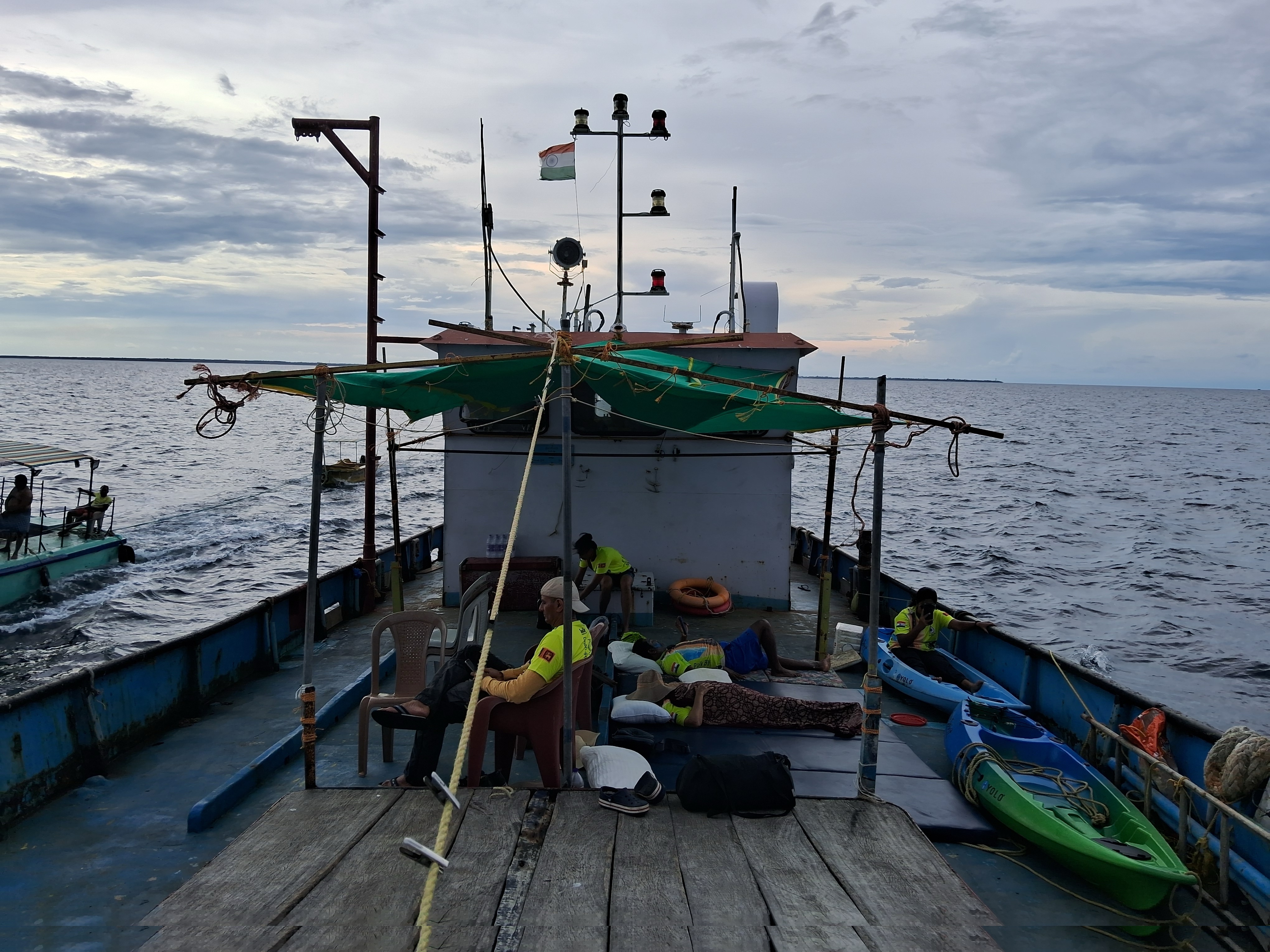
The night was pleasant; we were sleeping on the deck. If you live in Delhi NCR, you would also appreciate a night under a sky lit with bright stars. The winds made it very cold, but thankfully, it did not rain. We got decent sleep despite the ship rocking in the sea, the cold winds, and the snoring – there were a lot of people on deck, including swimmers, kayakers, and ship operators.
The alarm went off at 3:30 am. The boats and the kayaks got ready, and we prepared for the swim. We started at 4:30 am. It was dark. We could see the red lights coming from the windmills on the Sri Lankan coast. We needed to go in the other direction.
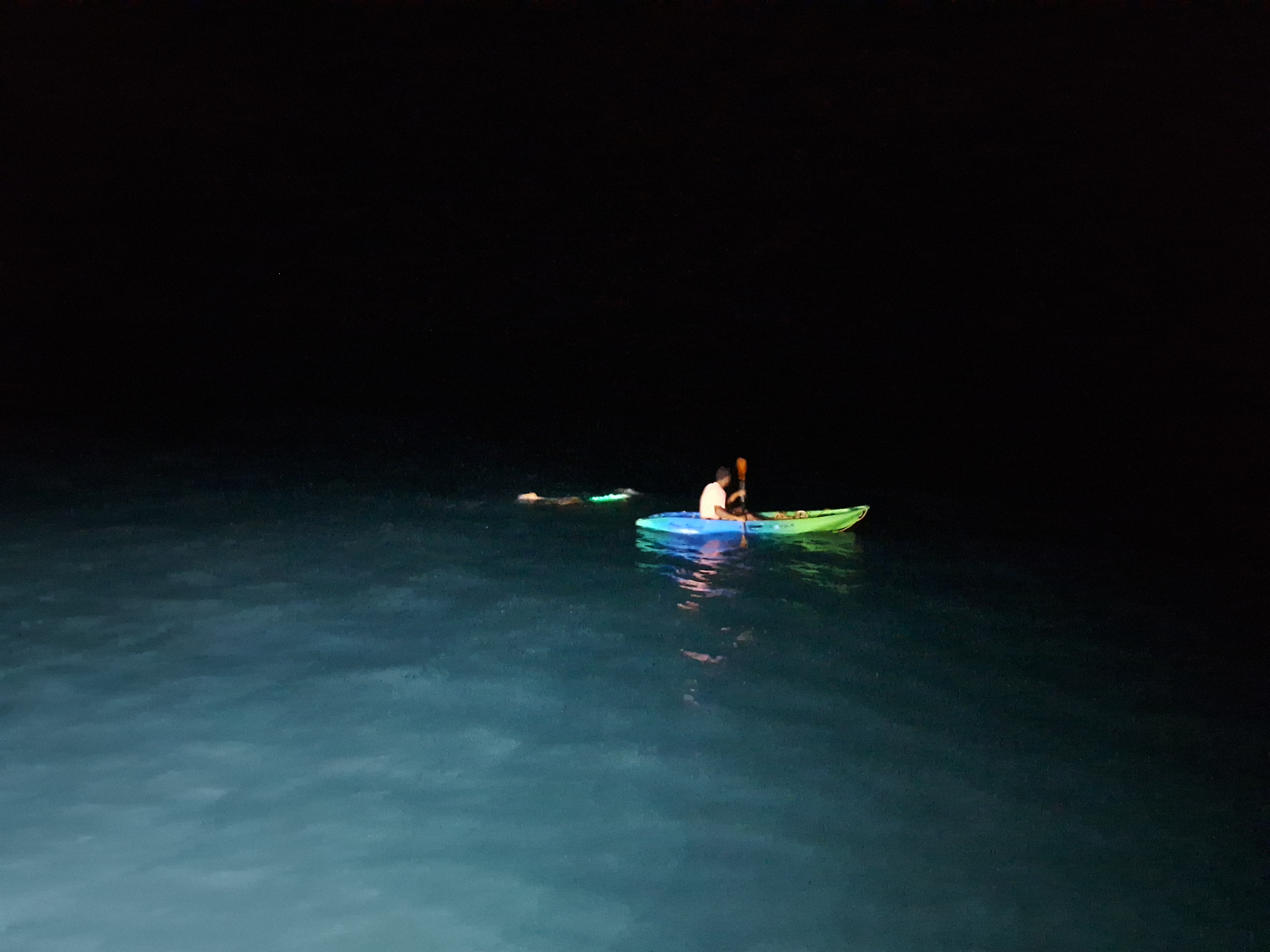
The first swimmer jumped into the water, and the swim started. The boat threw light on the swimmer and the kayaker, creating a small patch of visibility surrounded by pitch darkness.
I was next in line. I have never swum in the dark, and I was hoping not to have a panic attack. We also usually swim with buoys, which we can hold and float if needed. But in channel swims, we swim without them.
I also had to decide whether to wear a rash guard. In practice swims, I wore one because of the fear of jellyfish stings. I asked people, and I was told it’s up to me whether to wear one. I did not want the fear of the sting lurking in my mind. I decided to ditch both the rash guard and the fear of stings with a dekhi jayegi attitude.
How would I have reacted to a jellyfish sting while swimming for the first time in the dark in the biggest swim of my life? We would never know because I got no sting at all! In the practice, we were getting stung all over. But the move worked, and I was no longer worried about the sting. A small decision and a mental shift made such a difference!
I entered the water at 5:30 am. It was still dark. I did not feel any nerves; I guess we tend to rise to the occasion. Swam in the dark for a while, and then it slowly grew less dark. We had to follow the kayak. If we were going in the wrong direction, the kayaker would say, “Come left/right.”
At 50 minutes, my kayaker said, “10 more minutes.” Those were the longest 10 minutes of my life.
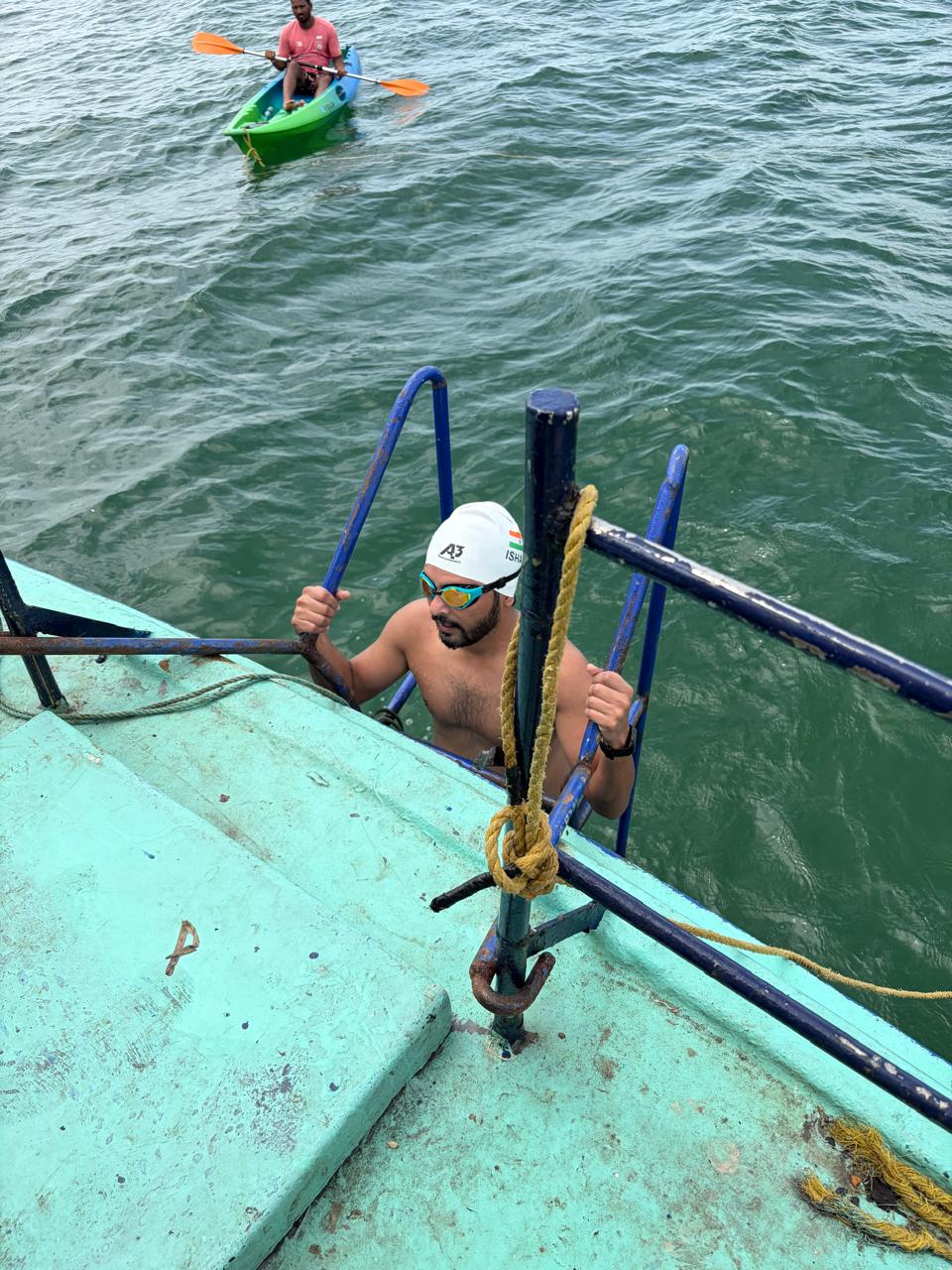
The swim continued. A swimmer would go in the water after an hour. Others would be on the boat – having food, relaxing, enjoying the scenery, chatting or introspecting.
It was my turn to go into the water again. I went in, and it started to rain for a few minutes. I was feeling it. Also did a little backstroke to soak in the moment.
The sea started to get rough. It was now feeling like a sea swim – the chop was rising, but it was still swimmable, until it wasn’t.
I am still not sure what happened – maybe the currents changed. But all of a sudden, I found myself stuck. It felt like I was on a treadmill. I was going all out, kicking hard, but it felt like I was just not moving forward. I was desperately trying to catch up with the kayak, to go left, go right – felt like nothing would work. It was a feeling of helplessness.
When my time was up, the swimmer next in line jumped in. I went back to the ship humbled but glad to have experienced this. I would be mentally better prepared should I find myself in such a situation again. We just need to grind it out!
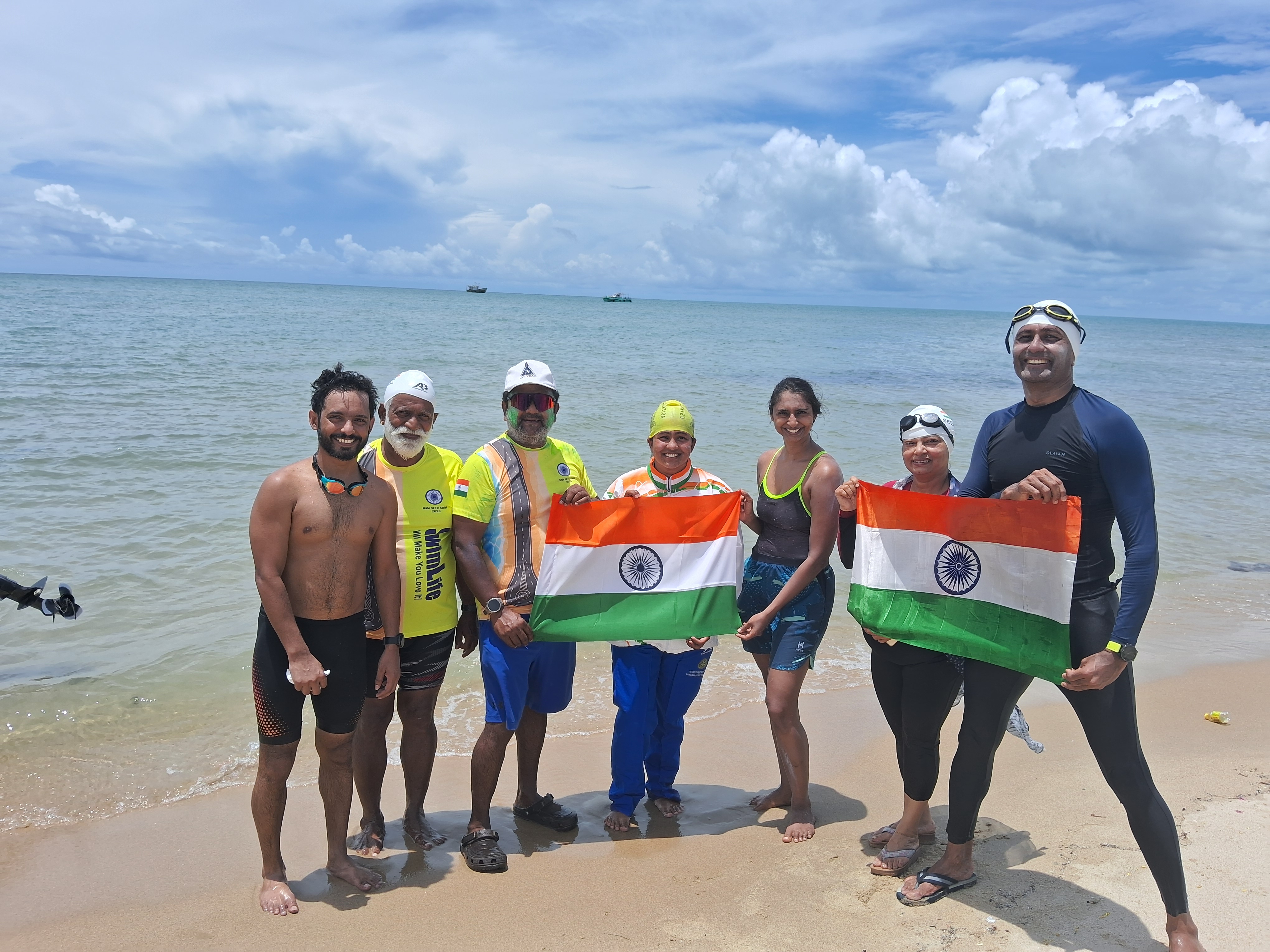
We reached the Dhanushkodi shore in Tamil Nadu, took many photos, thanked the organisers, and I did a little kayaking while waiting for the government officials to clear us to enter. We had done it, but it hadn’t sunk in yet. It still hasn’t.
Nevertheless, I am so glad to have completed a channel swim. Hoping to do more channel swims, maybe even solo swims, and hoping to do it soon.
You spend a lot of time training, a lot of money on the swims, get a lot of painful stings and a sunburn if you don’t take precautions like I didn’t. But you come back with a content heart – a feeling that is hard to explain. One can only experience it.